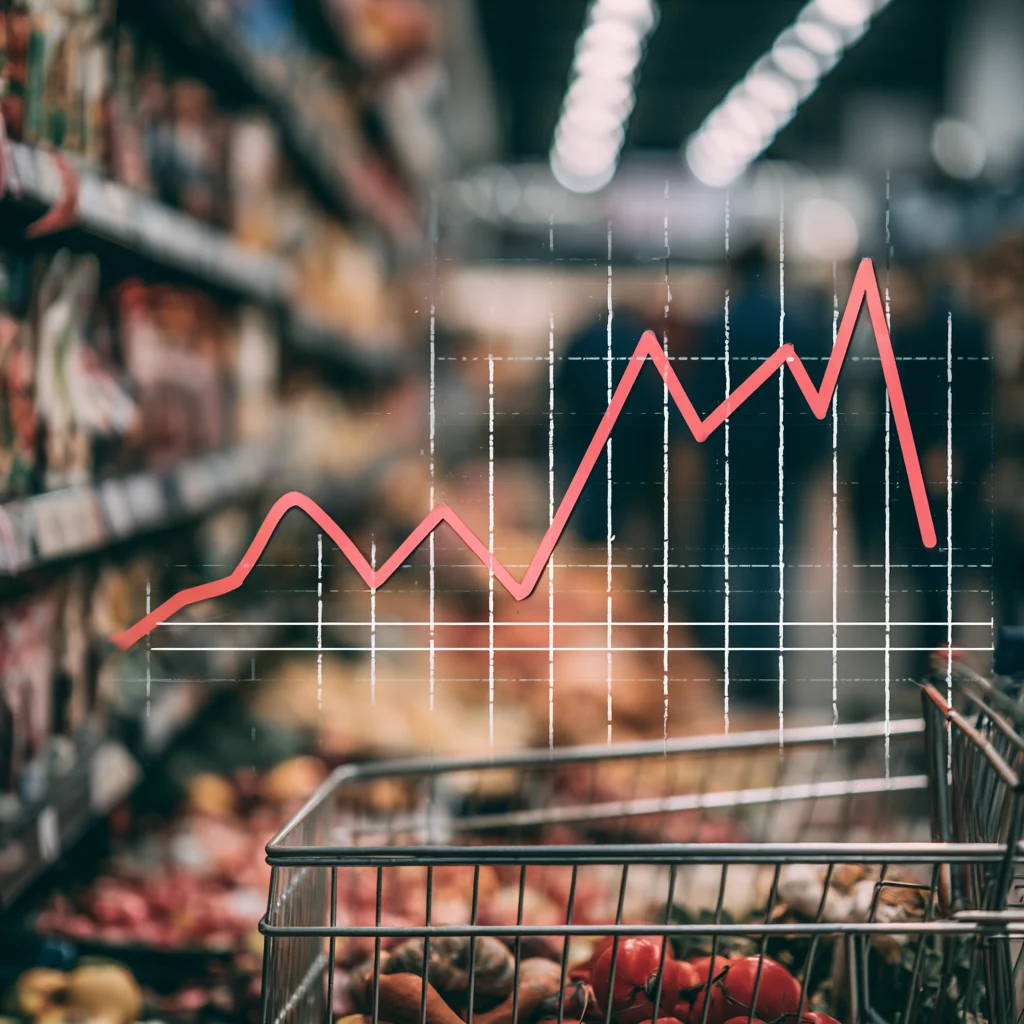


Consumer sentiment surveys have dropped to levels that historically showed up only in deep recessions, yet spending, corporate earnings, and the labor market keep pointing the other way. This week’s feature walks through the gap between what consumers say and what they do, and separates the University of Michigan number into the three things moving it: a partisan split in how people respond, a 2024 change in how the survey is conducted, and a real, bipartisan reaction to higher gas and prices. It also reviews what decades of Federal Reserve research found about whether sentiment readings predict anything useful for the months ahead.
US Economy
The Atlanta Fed’s GDPNow model is now tracking Q2 GDP at 2.8%, down from 3.3% on June 9.
The United States and Iran agreed to end the four-month conflict, with a formal signing set for June 19 and provisions including reopening the Strait of Hormuz, lifting the US naval blockade, and potential sanctions relief contingent on nuclear commitments.

Source: CNBC Read full article
Oil prices fell sharply. Global equities are rallying. Treasury yields are tumbling across the curve. Crop prices fell. Precious metals popped since the US Dollar fell.
The University of Michigan consumer sentiment index rebounded more than expected on relief from falling gasoline prices. Consumers’ median inflation expectations eased, particularly for the 5–10-year horizon. Financial conditions have resumed easing.
Electricity generated from solar surpassed that from coal in the US for the first time ever.

Here’s a look at global electricity costs.

Which countries produce the most silver?

The global suicide rate has fallen since the 1990s.

This chart shows the average age of first-time homebuyers by country.

Housing starts plunged in May, falling far short of expectations to their lowest level in six years. The plunge was driven by the volatile multifamily starts, while the core single-family segment fell more modestly. Housing units under construction, a more important driver of residential investment, have been broadly stable.
Here’s a look at the long-term trends in global effective tax rates.

Source: Goldman Sachs
A record 52% of US families with children now have both parents working full time.
Life expectancy has risen across all income groups since 1960, reflecting broad improvements in healthcare and living standards.

This map shows home price appreciation since 2021 by state.

US Stock Market
The S&P 500 Equal Weight Index has reached its 25th record high in 2026. The ratio of small-cap to large-cap equities has reached the highest level since December 2024. Consumer discretionary continues to weaken relative to the broader market, with the relative ratio sinking to 2012 lows. Momentum stocks continue to outpace the overall market.
The Russell 2000 has outperformed the S&P 500 by about 15% over the past year. Small-caps continue to lead the recovery in market breadth.
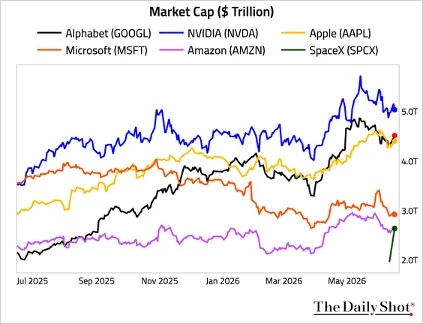
SpaceX’s valuation continued to surge.
The Fed
The new chair of the Federal Reserve, Kevin Warsh, is looking to institute a number of reforms at the central bank. On Wednesday, following his first meeting with the board as chairman, Warsh announced that task forces have been created to work on five areas “central to the broad conduct of monetary policy.” The five areas are the Fed’s communications, its balance sheets, its reliance and use of existing data sources, jobs and productivity, and its inflation frameworks. Warsh noted that these task forces will be made up of subject matter specialists and will “have a straightforward charge — start with first principles, ask hard questions, examine current practice, consider alternatives, and ultimately propose next steps for policymaker consideration.” He added the purpose is to have “a Federal Reserve that is clear-eyed about its mission, fit for purpose, and focused on the future.”
After listening to monetary policy hints and clues from Jerome Powell for eight years, investors now have a different voice to decode. Kevin Warsh is hosting his first press conference as the head of the central bank, which is also coming at another big juncture for the market—the winding down of the war in Iran. WTI crude oil (CL1:COM) even dropped another 6% on Tuesday to $75 per barrel, far below the $116 reached on April 6, but still elevated from the pre-war level of around $65.
The FOMC is widely expected to keep its benchmark rate unchanged at 3.50%-3.75% as uncertainty continues to reign over the trajectory of prices. More FOMC members have voiced concerns that inflation has remained above the Fed’s 2% goal for five years, and some policymakers say they can no longer ignore the one-time price increases that have piled on top of each other. While the labor market appears to be solid and U.S. economic growth is chugging along, there have been increased forecasts for a rate hike by the end of the year, so pay close attention to the removal of “easing bias” and the Fed’s Summary of Economic Projections.
The divide in views on policy is likely to be especially notable in the dot plot, and Warsh even encouraged robust debate during his Senate confirmation hearing. However, he’s more of a fan of limiting policy debate to FOMC meetings themselves and not telegraphing everything, since it could hinder the Fed’s decision-making abilities. Warsh may not participate in the dot plot this time around, and might even seek to eliminate the grid altogether and other methods of forward guidance. He could also revisit the traditional post-meeting presser, as well as explore new plans, ranging from balance sheet reduction to the inflation models used by the Fed.
“[Warsh] will likely acknowledge that economic conditions do not justify rate cuts at this time,” ING Economic and Financial Analysis writes in Kevin Warsh Navigates A Hawkish Fed Shift. “Nonetheless, he could reiterate his view that, in time, tech investment will boost US productivity, meaning faster growth without generating inflation. That would imply a lower neutral interest rate that justifies lower policy rates over the medium to longer term.”
In the first meeting under Kevin Warsh’s leadership, the FOMC voted unanimously to hold rates at 3.50%–3.75%, in line with consensus. The FOMC statement was drastically altered, noting that economic activity was “expanding at a solid pace” and that inflation “remains elevated.” The statement emphasized that the FOMC “will deliver price stability.” The FOMC raised its 2026 inflation projection sharply while trimming its GDP growth forecast. Chair Warsh, who has been critical of forward guidance, did not submit his forecasts. Nine out of 18 officials penciled in at least one hike this year, with six of the nine forecasting multiple hikes.
Great Quotes
“I find television very educating. Every time somebody turns on the set, I go into the other room and read a book.” – Groucho Marx
Picture of the Week
Downtown San Francisco

All content is the opinion of Brian Decker