


A strong economy and a stretched market are sending very different signals in 2026. Industrial production rebounded in April, jobless claims sit near multi-year lows, and forecasters have trimmed their recession odds. At the same time, stock market gains have narrowed to a small group of large technology companies, valuations in sectors like semiconductors have reached extremes, and the April Federal Reserve minutes showed officials growing more concerned about inflation. The article below rounds up the latest data on the US economy, the markets, and the Fed, with charts and sources.
US Economy
Industrial production rebounded by a strong 0.7% in April, well above forecasts, driven by AI-related strength in computers and electronics as well as precautionary inventory building amid Middle East supply-chain concerns. The increase was broad-based, with gains in both manufacturing and utilities output.
The ISM new orders index points to further gains ahead. Capacity utilization rose. The New York Fed’s Empire State Manufacturing Index jumped, topping expectations. The new orders component strengthened further. Shipments remained strong. The six-month-ahead business conditions index rebounded sharply. Goldman shaved the 12-month recession probability from 30% to 25%, as economic activity has held up and financial conditions have eased back below pre-conflict levels.
Employment edged down, although future expectations improved. Delivery times lengthened, indicative of renewed supply-chain issues. Prices received surged. Job postings have fallen by nearly 60% since early 2022, but demand for frontline healthcare and delivery roles has remained resilient. Revelio Labs also highlights a clear inverse relationship between pay and job security, with high-paying specialist roles such as software engineers and product managers experiencing the sharpest declines in hiring demand.
Consumer spending remains the primary driver of US economic growth because it accounts for more than two-thirds of GDP, although the economy has become more resilient over time as services have gained share and oil intensity has declined steadily since the 1980s.
Business activity in New York’s service sector rose to its highest level in over a year, signaling a much slower pace of contraction.
Employment turned positive for the first time since last summer.
Input price pressures remained elevated, which could continue to squeeze margins.
Homebuilder sentiment rebounded modestly but remained in contraction, as elevated mortgage rates and persistent affordability constraints continued to weigh on demand.
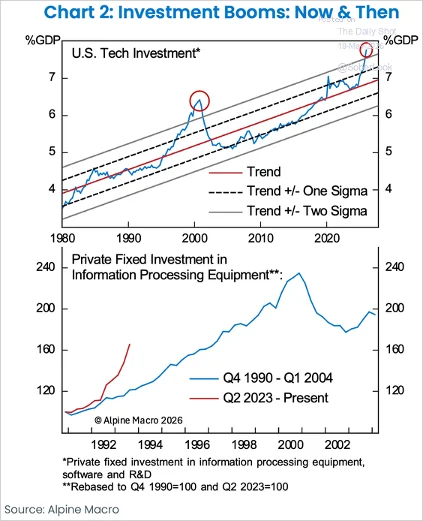
Alpine Macro believes we are still in the middle of a multiyear investment boom.
For the first time, Anthropic has surpassed OpenAI in adoption by US businesses.
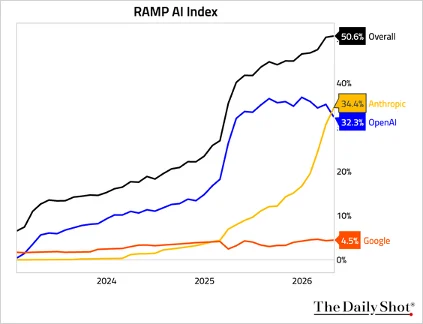
Source: Ramp Economics Lab Read full article
Initial jobless claims fell to 209,000, below consensus and near a two-year low, underscoring the labor market’s remarkable stability. Continuing claims rose modestly to 1.782 million but remained lower than the same period last year.
The Atlanta Fed’s GDPNow model is tracking Q2 GDP at 4.3%.
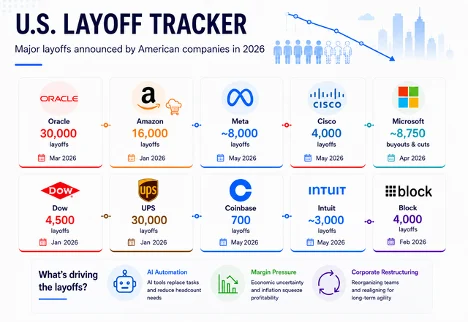
Companies in the U.S. appear to be increasingly laying off employees, with many of them attributing the job cuts to AI-driven efficiencies and higher spending on the new technology. The layoffs also come at a time when the labor market is seeing a slowdown in hiring and wage growth that lagged retail inflation in April for the first time since 2023. But how much of this slowdown is because of AI?
US Stock Market
Bank of America estimates that household equity wealth has risen by $4 trillion year to date.
Where is gold stored in the US?
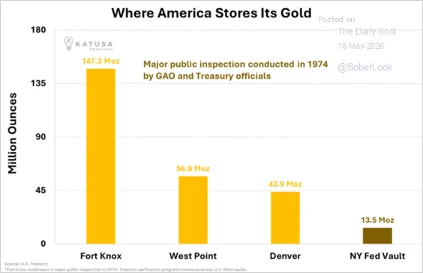
Source: Katusa Research
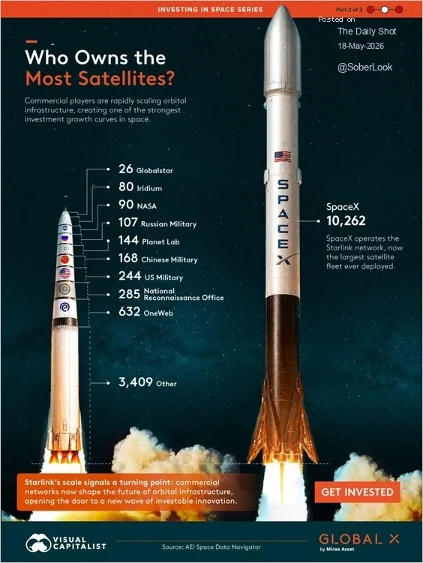
SpaceX dominates the global satellite market with 10,262 operational satellites.
Source: Visual Capitalist Read full article
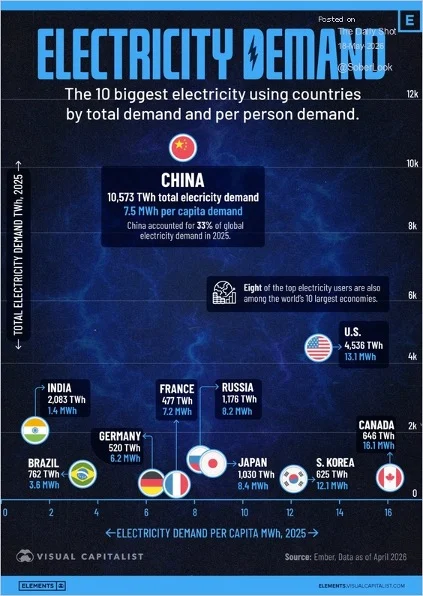
Which countries use the most electricity?
Source: Visual Capitalist Read full article
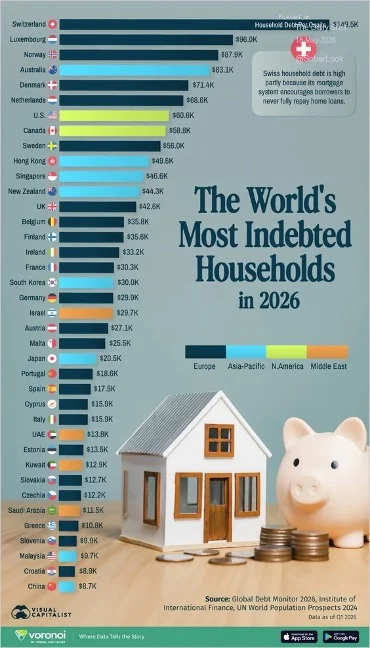
Switzerland’s household sector ranked as the world’s most indebted in 2026.
Source: Visual Capitalist Read full article
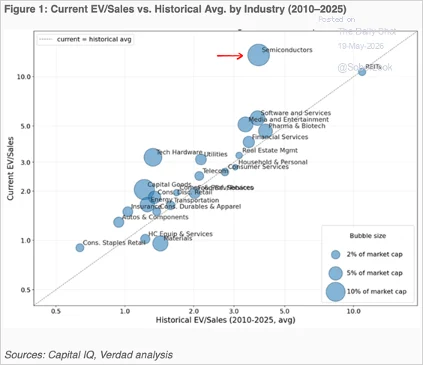
This chart shows valuations by industry today versus the 2010–2025 average. AI-driven enthusiasm has pushed semiconductor valuations to an extreme.
Source: @verdadcap
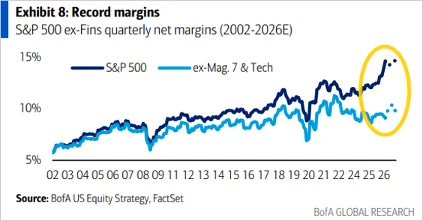
The record profit margins are predominantly driven by the Mag-7 and technology stocks.
Source: BofA Global Research via @neilksethi
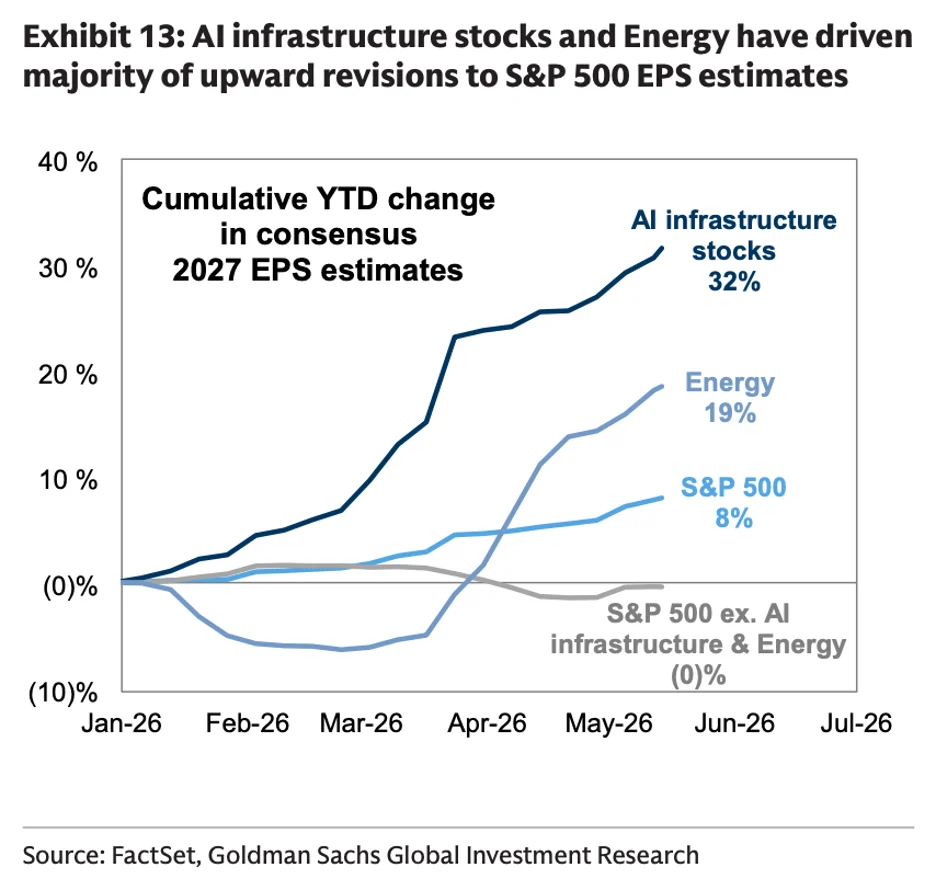
AI infrastructure stocks and energy have driven the majority of upward revisions to S&P 500 EPS estimates.
Source: Goldman Sach
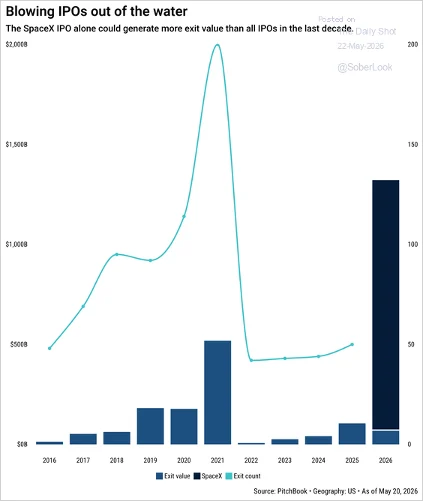
The SpaceX IPO alone could generate more exit value than all IPOs in the past decade combined.
The Fed
Minutes from the April FOMC meeting showed officials growing more concerned about persistent inflation, with “a majority” indicating they could support “some policy firming” if inflation remains above target, even as “most” participants continued to see downside risks to the labor market.

Source: Bloomberg Read Full Article
Great Quotes
“What the wise man does in the beginning, the fool does in the end.” – Warren Buffett
Picture of the Week
Flags near Lincoln Memorial, Washington, USA

All content is the opinion of Brian Decker